Committed to the Future, Fulfilling the Promise of Excellence

How Optical Coatings Improve Illumination and Imaging System Performance

A common situation arises in many practical optical applications:
The light source works normally, and the lenses and structure have been built to specification, yet actual operation reveals lower-than-expected brightness, poor image contrast, or inconsistent illumination and exposure results.
These issues often arise from unnoticed light losses and interference within the system rather than “equipment failure”. Optical coatings are one of the key factors affecting these results.
 

1. Why Does an Optical System “Work Normally” Yet Fall Short of Its Performance Potential?

Light is expected to enter the system, pass through its optical components, and reach the target along the intended path. In practice, however, reflection and energy loss naturally occur whenever light travels from air into glass or between different optical interfaces.
 
If the system contains multiple lenses, prisms, or other optical components, these small reflection losses accumulate at successive interfaces, leading to common problems such as:
  • Illumination systems: insufficient brightness and uneven light distribution, with usable optical energy far below the light source output
  • Imaging systems: reduced image contrast, shadows, or stray light that compromise interpretation and measurement accuracy
These performance shortfalls are often not apparent during individual component testing, but become increasingly pronounced after system integration.
 
When an optical system “appears normal but consistently falls short of its intended performance”, the issue often lies in inadequate control of light propagation rather than in the light source or lenses themselves.

2. Optical Coating Fundamentals: How Coatings Change Reflection and Transmission

Optical coating involves more than simply “applying a protective layer” to a component surface. It uses interference effects in multilayer thin-film structures to precisely control reflection and transmission at optical interfaces.
When light strikes a coated surface, thin-film layers with different refractive indices and thicknesses cause some reflected light to cancel out or enhance transmission within specific wavelength bands, achieving the following objectives:
  • Reduce unwanted surface reflections
  • Increase useful light transmission
  • Control the behavior of light within specific wavelength bands
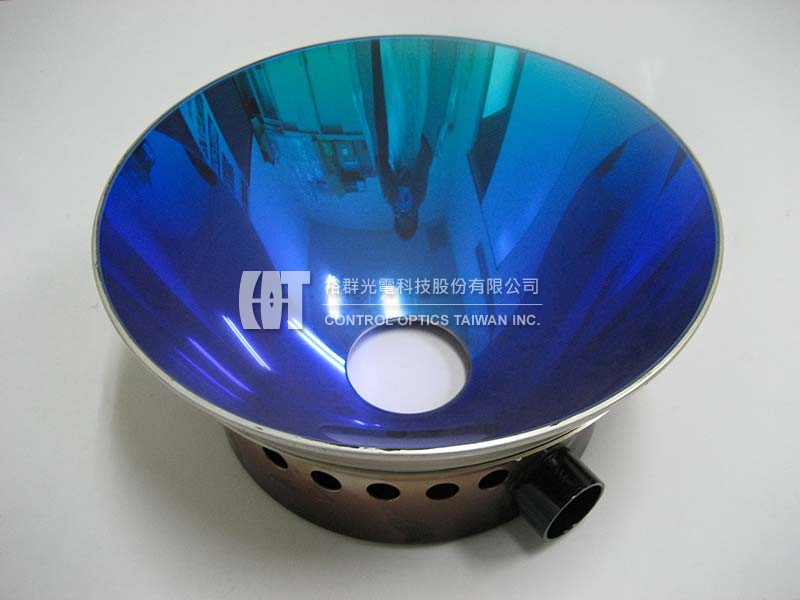
Depending on their function, optical coatings can be broadly classified as antireflective coatings, highly reflective coatings, wavelength-selective coatings, and other types.
In practice, coating designs are tailored to the operating wavelength range, angle of incidence, and optical component material. Coatings are therefore an integral part of optical design, rather than merely a finishing option.


Optical coatings are tailored to the operating wavelength range, angle of incidence, and optical component material

3. How Optical Coatings Improve Illumination and Imaging System Performance in Practice

1. Effects on Illumination Systems

In illumination applications, the main value of optical coatings lies in improving light utilization efficiency and stability. Reducing reflection losses allows more optical energy to reach the working area, preventing light source output from being wasted within the system.
When used with mirrors, diffusers, and other components, appropriate coating designs help distribute light more evenly, reducing uneven brightness and localized bright spots. This is particularly important for equipment that operates for extended periods or requires high consistency.

2. Effects on Imaging Systems

Imaging systems impose stricter requirements on optical quality. Stray light generated by surface reflections can reduce image contrast and, in high-precision applications, affect measurement and interpretation results.
Optical coatings effectively suppress unwanted reflections, improving image clarity and the signal-to-noise ratio so that the system performs closer to its original design target. They also reduce the compensation required from downstream image-processing algorithms, making overall system operation more stable and predictable.
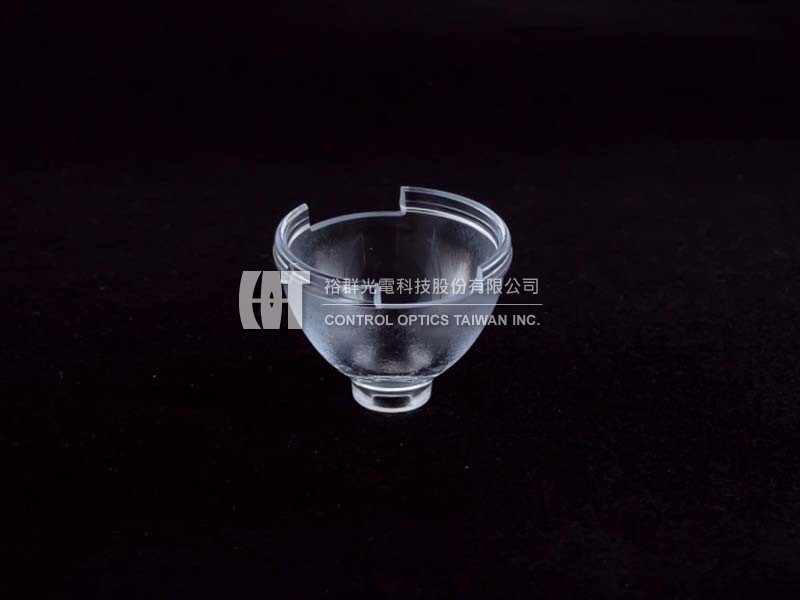
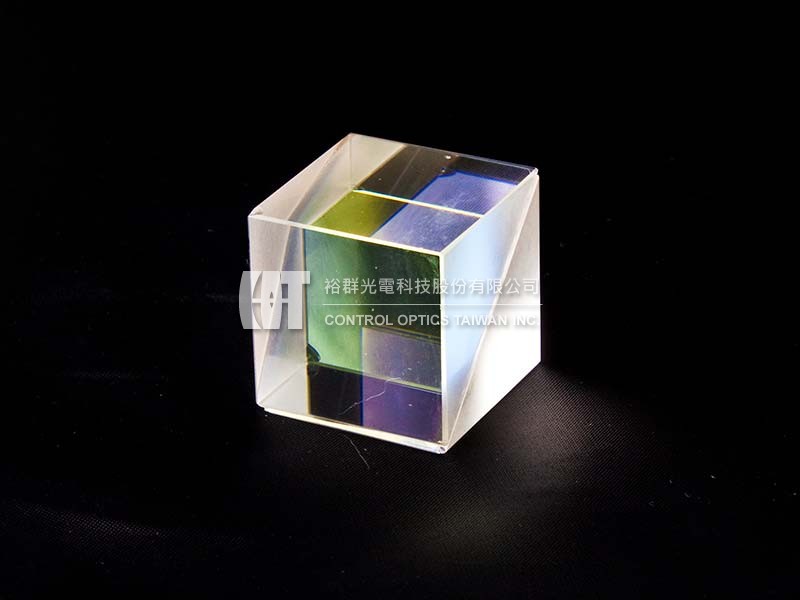
Optical coatings improve light utilization efficiency and stability

Optical coating design improves overall system reliability

4. Choosing Optical Coatings: Beyond “Is It Coated?” to “Is the Coating Suitable?”

In practice, not every coating benefits the system.
If the coating design does not match actual operating conditions, it may instead reduce transmission or cause a spectral shift.
When selecting optical coatings, evaluate the following factors together:
• Light source and operating wavelength range
• Angle of incidence and system configuration
• Optical substrates, such as optical glass or quartz
• Actual operating environment and duration of use
Rather than simply asking “Is it coated?”, it is more important to understand whether the coating meets the actual system requirements.
Considering coatings early in the design process helps reduce the cost of later adjustments and improves overall system reliability.

5. FAQ|Frequently Asked Questions About Optical Coatings

Q1: Do all optical components need optical coatings?
Not necessarily. However, coatings usually provide significant improvements when a system has requirements for efficiency, stability, or image quality.

Q2: Do optical coatings affect component service life?
Properly designed and applied coatings generally do not shorten service life and can help improve stability.

Q3: Do illumination and imaging systems have the same coating requirements?
Not entirely. Illumination systems emphasize efficiency and uniformity, while imaging systems place greater importance on contrast and stray light control.

Q4: Can optical coatings be added at a later stage?
In some cases, yes. For most systems, however, evaluating coatings from the early design stages produces better results.